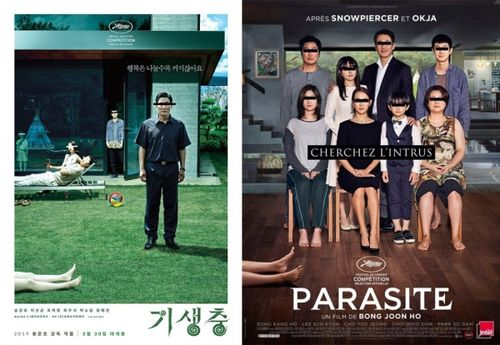
Parasite house symbolism is one of the most fascinating storytelling devices in Parasite, the Oscar‑winning film by Bong Joon‑ho. The homes in the film are far more than passive sets—they are characters in their own right, illuminating Korea’s class divisions, its cultural underpinnings, and the unseen rules that shape everyday life.
In this article, we’ll unpack the design, architecture and meaning behind the two contrasting homes: the luxurious mansion of the Park family and the semi‑basement flat inhabited by the Kim family. Whether you’re intrigued by Korean interior design, architecture, or sharp social commentary, you’ll find layers you may never have noticed before.
Introduction to Parasite House Symbolism
The film uses architecture as a visual language. The spaces people inhabit reflect their values, their limitations—even their destinies. From a sun‑lit modern mansion to a damp, cramped semi‑underground flat, every wall, window and flight of stairs plays a part in telling the story.
Korean homes carry cultural meaning: notions of privacy, hierarchy, and whether one lives “above ground” or not. Parasite amplifies these themes to expose how social class has a physical presence—even in the walls that surround us.
Overview of Architecture in Parasite
The architecture in the film wasn’t chosen randomly. Both houses were purpose‑built on sound‑stages so that lighting, angle and movement could be controlled meticulously. :contentReference[oaicite:2]{index=2}
Bong Joon‑ho once noted that the house was treated like a character itself—minimal yet expressive, beautiful yet unsettling. The result: a space that feels real, but functions like a dramatic stage where class conflict unfolds.
Symbolism of the Rich House (Park Family Home)
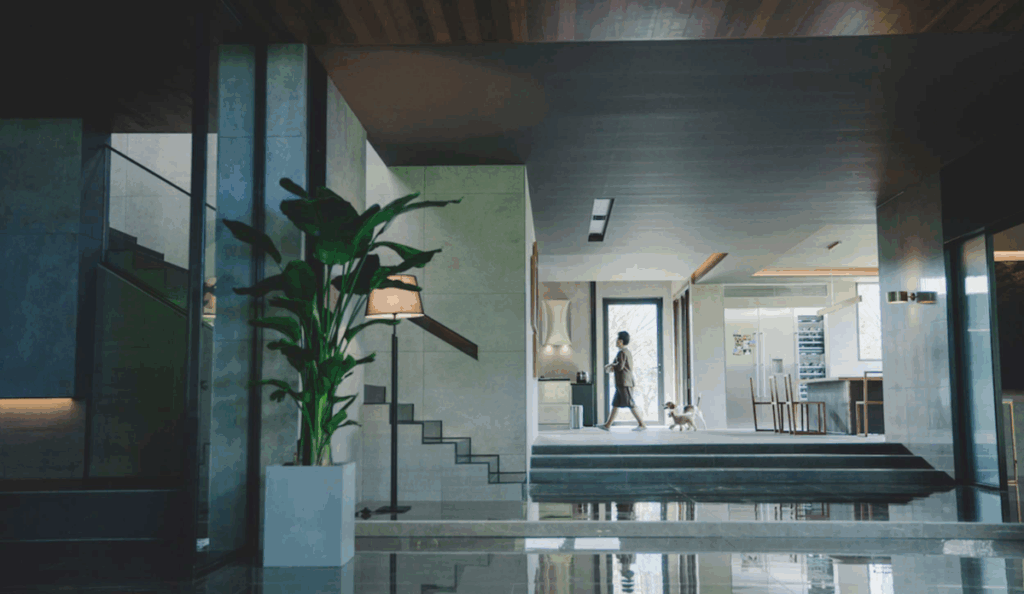
The Park family’s home is not just large—it’s saturated with design language.
Vertical hierarchy in architecture
Elevated structure and wealth
The Park house sits on higher ground. A long pathway ascends through open land, creating a feeling of superiority—of being “above” others.
Light, minimalism, and curated luxury
The walls and windows flood the rooms with light. The space is minimal, open, and composed of expensive materials. It reflects a life free from chaos—a stark contrast with the cramped semi‑basement.
The Semi‑Basement (Kim Family Home)
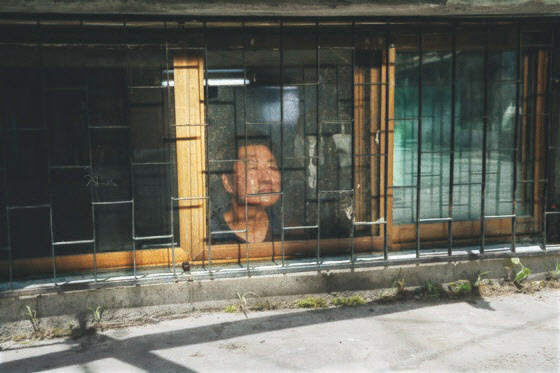
The Kim family’s home is symbolic of a life suspended between states.
Low ceilings and trapped perspective
They’re not fully underground—but neither are they above. This liminality mirrors their social status: visible, and yet ignored.
Korean “banjiha” culture explained
The semi‑basement apartment—known in Korea as banjiha—is a real phenomenon: originally built as bomb shelters and later rented cheaply to low‑income families. The film didn’t exaggerate—it reflected reality.
The Stairs as a Narrative Device
Stairs in Parasite appear constantly. They symbolize upward mobility, social aspiration, the struggle to climb, and the inevitable fall.
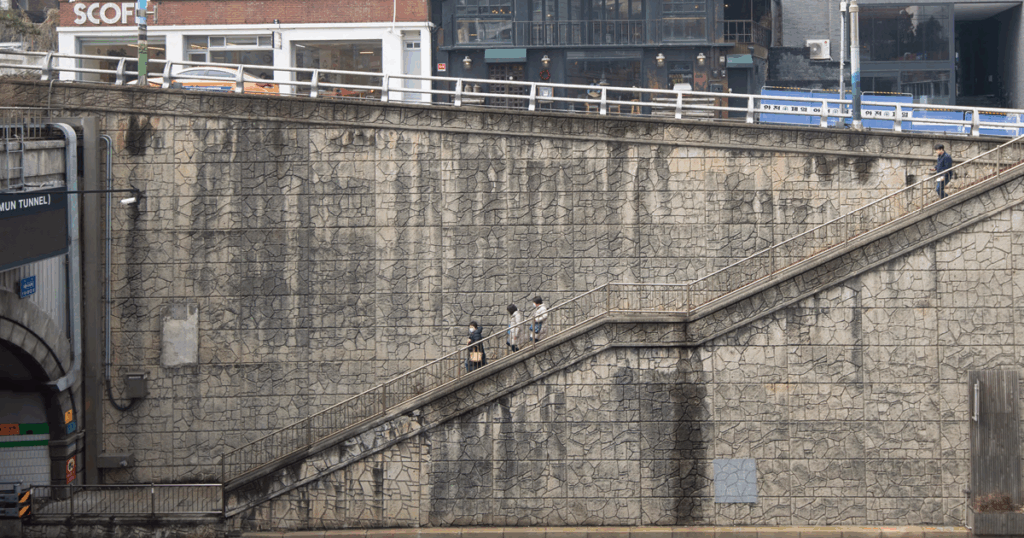
Every movement—up or down—shows social tension. For example, when the Kims descend during the storm, it visually mirrors their collapse.
Light vs. Darkness in Spatial Design
Light is one of the most important visual tools in the film, and it’s tightly woven into the concept of parasite house symbolism. In the Park home, light pours in through large glass windows: clarity, privilege, effortless brightness. In the Kim home, light is scarce—what little arrives comes through dingy alley‑facing windows. It conveys not only income inequality but emotional states. The Kims live in chaos and darkness; the Parks in curated, calming light.
Materials and Textures: Wealth vs. Poverty
The surfaces in the film tell their own story.
Wealth expressed through luxury textures
The Park home employs: polished wood, smooth stone, vast glass panes, designer furniture. These aren’t just stylish—they communicate security, stability and refinement.
Poverty reflected in rough textures
The Kim home contrasts with cracked concrete, uneven walls, rusty metal fittings, peeling wallpaper. Each texture feels unstable and raw—poverty isn’t just seen, it’s felt.
The Hidden Bunker and Social Shadows

One of the most striking symbols is the hidden bunker beneath the Park home. This secret underground space highlights the invisible layers of Korea’s class system: those who survive outside of view, literally underground. It reveals how hidden labour and forgotten lives support the visible comforts above.
Space as a Reflection of Human Behavior
In Parasite, architecture dictates behaviour. The Parks stroll gracefully—because their home lets them. The Kims crouch, duck, squeeze—they must, because their space demands it. The way people move in the film becomes a metaphor for social mobility: the more space you have, the freer you are to exist.
Real Korean Housing Culture and Global Misunderstandings
Many non‑Korean viewers might assume the film exaggerates Korean living conditions—but the housing realities shown in Parasite are rooted in truth:
- Semi‑basement apartments are common for low‑income families in Seoul.
- Housing prices in Seoul are extremely high, creating barriers to mobility.
- Luxury homes often emphasise privacy and minimalism as markers of status.
- Access to space, sunlight and view are privileges, not guarantees. The film makes that painfully clear.
Understanding these realities makes the film’s message even more powerful.
Parasite House Symbolism in Korean Interior Aesthetics
Modern Korean luxury interior design often blends nature, minimalism and order. The Park house is a textbook example: wide open rooms, hidden storage, warm wood tones, garden views. Meanwhile, the Kim home shows how limited space can shape identity, comfort and opportunity rather than simply reflect it.
함께 읽으면 좋은 글
- A Shop for Killers season 2 : S1 House Design, Interior, Hidden Meaning
- What’s That House Style in ‘When Life Gives You Tangerines’?
- My Bias, My Boss | Where to Watch, Cast & Episodes (Not Netflix)
FAQs About Parasite House Symbolism
1. Why are the houses central to the film’s message?
Because the homes visualise the class divide more powerfully than dialogue ever could—the story literally climbs and descends through these spaces.
2. Is the Park house a real home?
No. It was built specifically for the film to allow precise control of lighting, framing, and movement.
3. Why is the semi‑basement so important?
It symbolises people who live “halfway” into society—present but powerless, visible but neglected.
4. What do the stairs represent?
They are a motif for social mobility—or the difficulty thereof. Up means hope; down means despair.
5. Does lighting really carry symbolic meaning?
Absolutely. Brightness signifies privilege; dimness signifies hardship and precarity.
6. Is this symbolism unique to Korean culture?
Some aspects—such as banjiha culture, and specific housing pressures in Seoul—are uniquely Korean. Other elements—class, space, hierarchy—are unfortunately universal.
Insights Into Parasite House Symbolism
Parasite isn’t just a film about class conflict—it’s a film where architecture *speaks*. Through light, height, materials and hidden subterranean spaces, Bong Joon‑ho builds a world in which houses tell you about who people are and what they cannot escape.

Understanding parasite house symbolism allows us to appreciate how deeply architecture and social identity are intertwined. Whether you’re fascinated by Korean interior design or global cinema, the homes in Parasite offer powerful insights into contemporary society.
If you’d like to dive deeper into Korean housing culture, check out resources such as the Korea Tourism Organization.
Did you catch a hidden layer we missed? Drop a comment and let’s dig into the architecture of class together.