Someone in a K-drama drops a bag of groceries, stands up with a sigh and says “aigoo.” Two episodes later a grandmother hugs her grandson and says exactly the same word in a completely different voice. The subtitles might read “oh no” in one scene and “oh my” in the other.
The aigoo meaning changes with the moment, which is why it is so hard to translate and so easy to hear. This guide explains what aigoo actually covers according to Korea’s official learner’s dictionary, and it walks through the other short exclamations that fill K-drama dialogue, from daebak to omo.
Aigoo is an all-purpose Korean exclamation for pain, tiredness, surprise, joy, frustration or grief. The tone tells you which feeling it carries. Daebak means a big success or “awesome,” and omo is a quick gasp of surprise.
What aigoo means in the dictionary
The Basic Korean Dictionary, published by the National Institute of Korean Language, lists four senses for aigoo. It is a sound made when you feel pain, tiredness, surprise or disbelief. It is also a sound made when you are so pleased you do not know what to do. You can read the full entry in the Basic Korean Dictionary, checked on 13 October 2026.
The third sense is a sighing “darn it” when you feel discouraged or upset. The fourth is a cry of grief, used when someone has died or when you feel deeply wronged. One word covers moods that English needs four different phrases to express.
The official spelling under the government’s Revised Romanization of Korean is aigo. Fans write aigoo to show the long final vowel. The dictionary also lists aigu as a variant that points back to the same entry.
How to tell which aigoo you are hearing
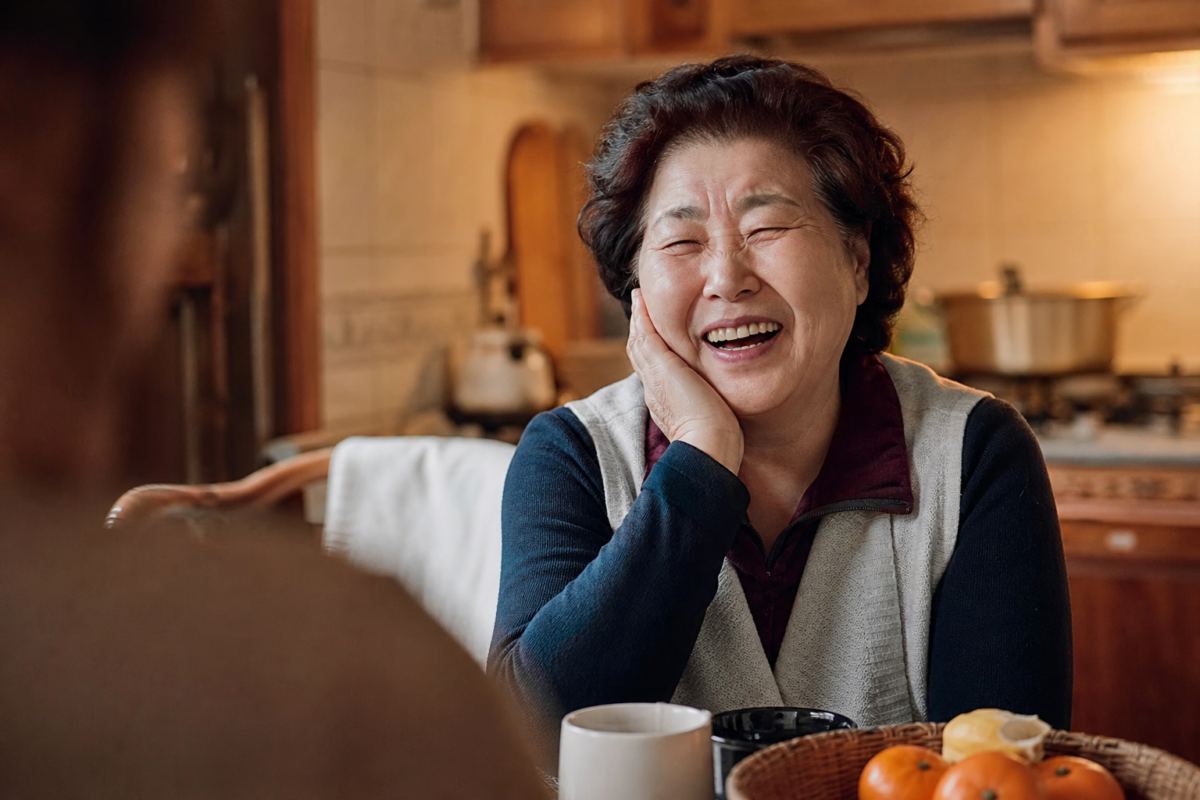
Because the dictionary gives four very different senses, context and voice do all the work. A short, low aigoo while standing up from a chair is tiredness. A drawn-out, rising aigoo while pinching a child’s cheek is affection and delight.
A heavy aigoo with a shake of the head is frustration, often aimed at someone who has done something foolish. The grief sense is the one to take seriously, because in a funeral or hospital scene it is a cry rather than a comment. Watching faces as well as reading subtitles helps you separate them.
Longer forms push the feeling further. The dictionary lists aigomeoni and aigomeonina as stronger versions used when something is very painful, tiring, surprising or absurd. Hearing one of these usually means the character is genuinely shaken.
Other K-drama exclamations you will hear
Aigoo has plenty of company. Korean dialogue is full of short reactions that subtitles flatten into “wow” or “oh.” The table below lists the most common ones with their dictionary meanings, official spellings and the spellings fans usually use.
| Fan spelling | Official spelling | Dictionary meaning |
|---|---|---|
| Aigoo | aigo | Pain, tiredness, surprise, joy, frustration or grief |
| Daebak | daebak | A great success, used figuratively |
| Omo | eomeo | Sudden surprise or admiration at something unexpected |
| Sesange | sesange | Shock at something surprising or extreme |
| Aicham | aicham | Shyness, nervousness or mild annoyance |
| Jinjja | jinjja | Really, genuinely |
| Hwaiting | paiting | A cheer shouted to encourage a player or team |
All definitions come from the Basic Korean Dictionary entries for each word. Most of these are casual, so they suit friends and family rather than formal speech. Aigoo is the exception that crosses every age group.
Daebak: the word for awesome
Daebak is defined in the dictionary as the achievement of something big, used figuratively. In conversation it works like “awesome,” “amazing” or “jackpot.” A character who hears great news, sees a huge meal or watches a friend pull off something impressive will often just say daebak.
It can also be sarcastic. Said flatly after bad news, daebak means something closer to “well, that is just great.” The word stays the same, and the delivery flips the meaning.

Omo and sesange: surprise words
Omo is the fan spelling of eomeo, an interjection the dictionary defines as an exclamation used when one is suddenly surprised or impressed by something unexpected. It is quick and light, like a gasp. You will hear it when someone spots a friend unexpectedly or sees something cute.
Sesange is heavier. The dictionary defines it as an exclamation for something shocking or extreme, and it literally contains the word for “world.” Think of omo as “oh!” and sesange as “good heavens,” with real disbelief behind it. Both are interjections, so they stand alone rather than sitting inside a longer sentence.
Jinjja and aicham: doubt and embarrassment
Jinjja is an adverb the dictionary defines as “genuinely” or “really,” truly and without pretence. On its own, with a rising tone, it becomes a question: “really?” Repeated as jinjja jinjja, it turns into an insistent “I mean it.”
Aicham is softer and more personal. The dictionary describes it as an exclamation used when the speaker is shy, nervous or dissatisfied with something. In romance scenes it often signals a flustered character who has been teased and does not want to admit they are pleased. The English “jeez” is the dictionary’s own gloss.
Hwaiting: cheering someone on
Hwaiting comes from the English word “fighting,” and its meaning has nothing to do with a fight. The dictionary lists it under the standard spelling paiting and defines it as a cheer shouted to encourage a player or team. The common spelling hwaiting points to the same entry.
In dramas it goes well beyond sports. Characters say hwaiting before an exam, a job interview or a difficult conversation, often with a raised fist. It is the closest thing Korean has to “you’ve got this.”
Using these words yourself
Exclamations are one of the easiest parts of Korean to pick up from dramas, because they depend on rhythm and tone rather than grammar. Our guide to learning Korean with K-pop and K-dramas explains why this kind of listening is where media genuinely helps learners.
Be careful with context. Aigoo and hwaiting work almost anywhere, but daebak and jinjja are casual and can sound too relaxed in a formal setting. If you want plenty of big reactions, high-drama genres such as makjang are a good place to listen, and our explainer on K-drama genres tells you where to find that style.
Aigoo meaning frequently asked questions
What does aigoo mean in English?
There is no single translation. The dictionary lists four senses: pain or tiredness, joy, frustration and grief. Depending on tone it can mean “oh no,” “oh my,” “darn it” or “my goodness.”
Is aigoo rude?
No. It is a natural exclamation used by people of every age. A frustrated aigoo aimed at someone can sound critical, but the word itself is not impolite.
How do you spell aigoo officially?
The Revised Romanization spelling is aigo. Fans add an extra o to show the long final sound. Aigu is a listed variant that means the same thing.
What does daebak mean?
The dictionary defines it as a great success, used figuratively. In speech it works like “awesome” or “jackpot.” Said flatly, it can also be sarcastic.
What is the difference between omo and aigoo?
Omo is a quick gasp of surprise or delight at something unexpected. Aigoo covers a much wider range, including tiredness, frustration and grief. If someone is startled, expect omo; if they are weary or moved, expect aigoo.
Why do Koreans say fighting?
Hwaiting, from the English “fighting,” is a cheer of encouragement. The dictionary lists it as a shout to cheer on a player or team. In daily life it means “good luck” or “you can do it.”