Enemies-to-lovers is one of the oldest engines in romance, and Korean drama has been running it for decades. What changes is the setting. Put it in a fantasy world with a royal court and the stakes stop being about pride and start being about power.
My Royal Nemesis did exactly that and reached number one on Netflix non-English rankings during its run.
What is confirmed
- Genre — love-hate fantasy
- Platform — Netflix
- Performance — reached number one on Netflix non-English rankings during its May-to-June 2026 run
As with any recent release, plot specifics and full cast lists circulate faster than they can be verified. We are listing what has been reported clearly and leaving the rest to the show.
Why fantasy travels well
No cultural homework required
Contemporary Korean dramas sometimes assume knowledge — how the university entrance system works, what a particular corporate hierarchy implies, why a certain neighbourhood name carries weight. Fantasy removes all of that. The rules of the world are explained to everyone at the same time, which puts an international viewer on equal footing with a domestic one.
Enemies-to-lovers is genre-proof
The structure works because it front-loads conflict. You do not need to wait for a misunderstanding to arrive — the antagonism is the starting position. That gives every early scene something to do, which matters in a format where the first two episodes often struggle.
Production design as the draw
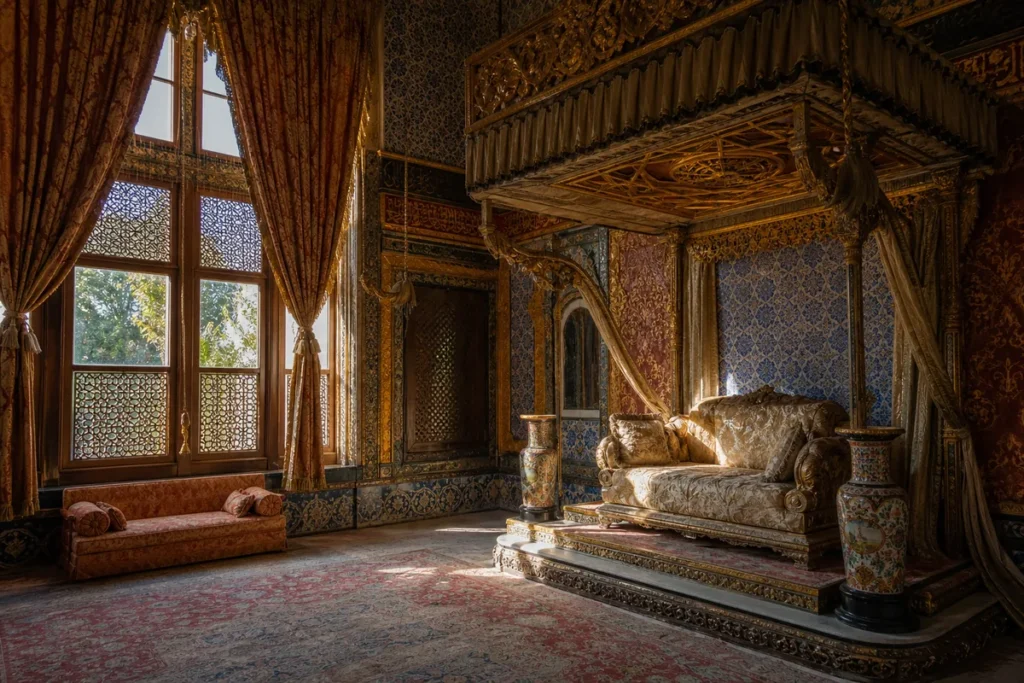
Korean fantasy and period productions have become a visual export in their own right. Costume, set and colour work are frequently the reason a clip spreads on social platforms, independent of the story. Visual appeal is a distribution strategy, not just an aesthetic choice.
Where to watch
| Item | Detail |
|---|---|
| Platform | Netflix |
| Run | May to June 2026 |
| Chart position | Reached number one, non-English rankings |
| Availability now | Streaming on Netflix after its original run |
One advantage of catching a series after its run: you can watch at your own pace. Korean dramas often release weekly, and fantasy in particular benefits from continuous viewing because the world-building details are easier to hold in mind.
Spoiler boundary
Nothing below discusses outcomes. For a love-hate story the ending is structurally predictable in shape but not in cost, and the cost is the interesting part. We will not touch it.
What to expect from the format
- Episode length — Korean episodes commonly run 60 to 70 minutes
- Single season design — many Korean dramas resolve fully. A fantasy that ends without a sequel has not been cut short
- Weekly original release — if you are watching after the run, this no longer affects you

How it compares to older Korean fantasy
Viewers who came to Korean drama through earlier fantasy hits will notice a shift. The older wave leaned heavily on a supernatural premise plus a contemporary setting. Recent productions are more willing to build a fully separate world and stay in it.
That change has a practical consequence. Fully secondary-world fantasy needs more setup, so the opening episodes carry more explanation. If you found older titles faster to get into, this is why — not because the writing is weaker, but because the world has to be established from scratch.
Is it a good entry point?
For fantasy readers and viewers, yes. The genre conventions do most of the orientation work for you. For someone who has never watched a Korean drama and does not read fantasy, a contemporary series is usually an easier first step, simply because there is one less unfamiliar system to learn.
Where to go next
If the appeal was the antagonistic dynamic rather than the fantasy setting, contemporary Korean drama has plenty of the same structure in workplace and legal settings. If it was the world-building, staying inside the fantasy and period side of the catalogue will serve you better.
Enemies-to-lovers, step by step
The structure is old but it is not arbitrary. Understanding the beats makes it easier to judge whether a given show executes it well.
- Genuine opposition first — the conflict has to be real, not a misunderstanding. If a conversation would resolve it, the story has no engine
- Forced proximity — something makes them share space. In fantasy this is often a binding oath, a shared enemy or a magical constraint
- Competence recognition — the turn usually starts when one respects the other professionally before liking them personally
- Cost of choosing — the antagonism existed for a reason, so choosing each other means losing something else
Weak versions skip the third beat and jump from hostility to attraction. The respect stage is what makes the shift believable, and it is the most reliable test of whether the writing is doing its job.
Fantasy and period drama are not the same category
English-language coverage frequently mixes these up, which leads viewers to the wrong show.
| Type | Setting | What to expect |
|---|---|---|
| Sageuk (historical) | Real Korean dynasties | Court politics, real titles and offices, no magic |
| Fusion sageuk | Historical look, invented kingdom | Freedom to change the rules. Often romance-forward |
| Secondary-world fantasy | Fully invented | Magic systems, more setup required |
| Contemporary supernatural | Present-day Korea | One supernatural rule inside a realistic world |
The practical consequence is pacing. A fully invented world has to explain itself, so the first episodes carry more exposition. If you found older Korean fantasy quicker to enter, that is usually because it was contemporary supernatural rather than secondary-world.
What to watch for in the production
Korean fantasy and period productions have become a technical showcase, and knowing what to look at makes the viewing richer.
- Colour discipline — many productions assign palettes to factions or emotional states. Once you notice it, scene transitions read differently
- Costume as rank — embroidery density, sleeve length and headwear encode status. It is information, not decoration
- Practical sets over digital — Korean productions still build a lot physically, which is why lighting behaves convincingly
These are not incidental details. A large share of what spreads on social platforms from Korean fantasy is visual, and that in turn drives the chart performance that made this series notable in the first place.
My Royal Nemesis: frequently asked questions
Is it still on Netflix after its run ended?
Netflix originals generally remain available on the platform after their release window. Check the title page in your region to confirm.
Do I need to have watched other Korean fantasy first?
No. Each series builds its own world and there is no shared continuity between Korean fantasy dramas.
Is there a second season?
No renewal has been confirmed. Many Korean dramas are written as complete single seasons, so the absence of a sequel is not unusual or a sign of poor performance.
How does the chart ranking actually work?
Netflix publishes weekly top ten lists split into English and non-English categories for film and television. Reaching number one on the non-English television list means it was the most-watched non-English series on the platform that week.