Quick Summary for Global Creators:
The South Korean content market is a $130 billion gold mine, but many foreign creators fail due to “Language Barriers” and “Opaque Contract Structures.” This guide reveals how to bypass these hurdles, protect your intellectual property, and maximize your revenue through Korea’s elite platforms and offline pop-up ecosystems.
The Hidden Reality of the K-Content Gold Rush
As a consultant who has spent over a decade bridging the gap between global creators and the Korean tech giants, I have seen too many brilliant IPs wither away before they even reach the Seoul city limits. You see the success of Solo Leveling or the viral Zanmang Loopy stickers, and you think, “My character belongs there.”
You are right. It does. But here is the bitter truth: the Korean market is one of the most sophisticated and “closed” ecosystems in the world. Whether it is the rigorous screening process of KakaoTalk Emoticons or the complex Revenue Share (RS) models of Naver Webtoon, entering without an insider’s map is like navigating a minefield in the dark.
I’ve sat in negotiation rooms at Pangyo Techno Valley, and I can tell you that what isn’t written in the English translation of your contract is often more important than what is. In 2026, the game has changed, and pure creativity is no longer enough—you need a strategic gateway.
The Three Pillars of Korean Revenue: Where the Money Actually Is
To succeed in Korea, you must understand that “Digital Presence” and “Physical Experience” are two sides of the same coin. The Korean audience doesn’t just consume content; they live it.
| Platform Type | Primary Channel | Est. Revenue Share | Barrier to Entry |
|---|---|---|---|
| Messaging IP | KakaoTalk Emoticons | 30% – 40% | Very High |
| Digital Storytelling | Naver/Kakao Webtoon | 50% – 70% (inc. MG) | Medium-High |
| Offline Experience | Seongsu/The Hyundai Pop-up | Variable (Sales based) | High (Logistics) |
Why Your Current Contract Might Be “Killing” Your IP
The most common mistake I see is signing “Standard Global Terms” that don’t account for the unique Korean “Minimum Guarantee (MG)” system. In Korea, platforms often provide an upfront payment, but this is recoupable from your future earnings. If your agency doesn’t negotiate the recoupment threshold correctly, you might find yourself with a hit character but zero monthly royalties for years.
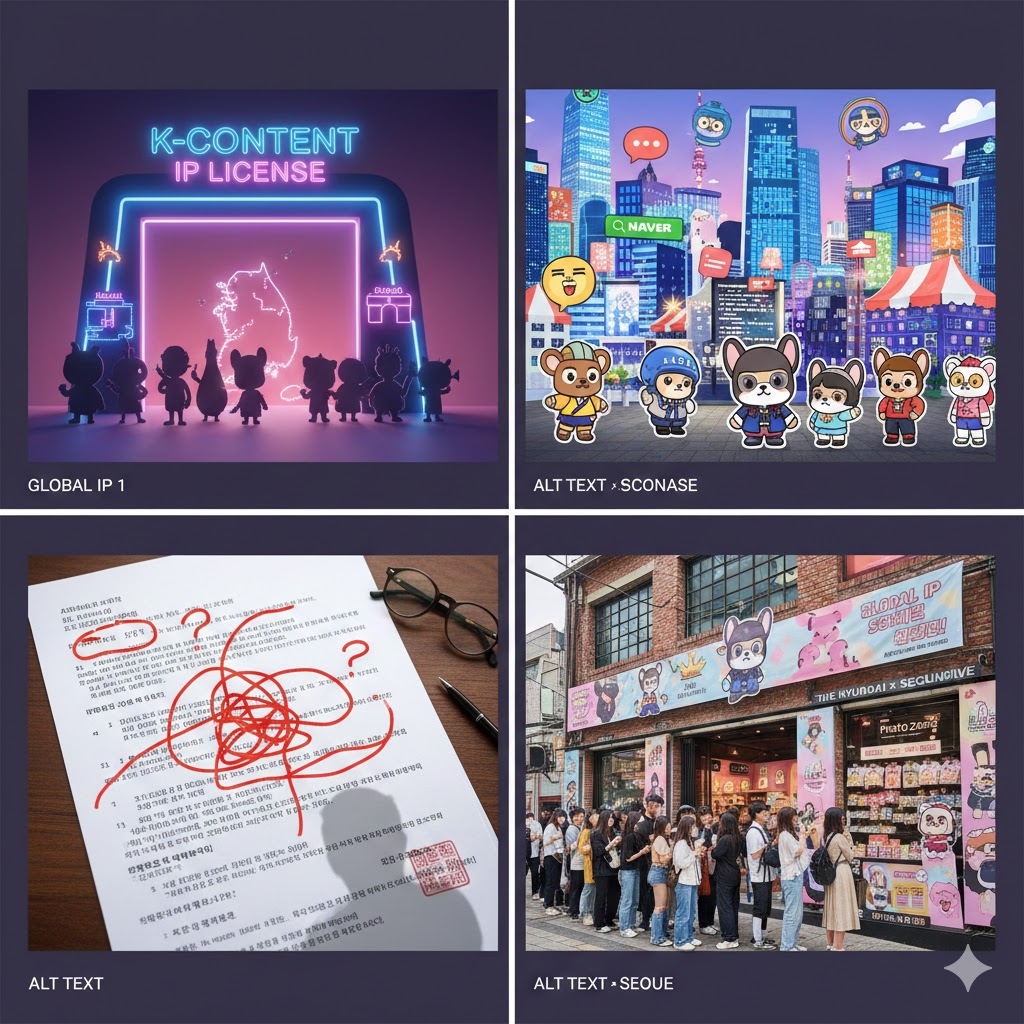
Furthermore, Secondary Licensing Rights are where the real wealth is built. In the Korean market, a successful webtoon or character isn’t just a digital asset—it becomes a pop-up store sensation in Seongsu-dong, a branded beverage at a convenience store, and a physical plushie at The Hyundai Seoul. If your contract doesn’t clearly delineate these rights, you are essentially handing over millions in potential merchandise revenue to the local distributor.
Critical Checklist: Before You Sign Anything
- Exclusivity Clause: Does the contract prevent you from launching on competing platforms (e.g., Naver vs. Kakao)?
- IP Ownership: Are you retaining the Master Rights for global territories, or is the Korean partner claiming a “Co-ownership” stake?
- Audit Rights: Do you have the right to audit the sales data from the Platform’s Back-end directly?
The 2026 Localization Blueprint: Beyond Simple Translation
If you think “Localization” just means translating your English script into Korean (Hangul), you have already lost. Korean users are extremely sensitive to Nuance and Trends.
I once worked with a European illustrator whose character was technically perfect but lacked the “B-grade Humor” currently trending among Korean Gen Z. By simply tweaking the character’s Expression Palette and adding “K-slang” stickers, we increased their KakaoTalk submission approval odds by 300%.
The Seongsu-dong Strategy: The Ultimate Goal
Why is everyone talking about Seongsu-dong? Because in 2026, this neighborhood is the Global Testing Ground for IP. If a foreign character succeeds in a Seongsu-dong pop-up store, it is virtually guaranteed to succeed across Asia.
The “Seongsu Strategy” involves creating an Immersive Brand Experience. It’s not just about selling stickers; it’s about “Photo Zones,” “Limited Edition Keyrings,” and “Collaboration Cafes.” To do this, you need a local partner who doesn’t just understand the law, but understands the Vibe.
Contact our team to review your Korean entry strategy and stop leaving money on the table.
Related Articles for Global Creators:
- Understanding the “MG vs. RS” System in K-Platforms
- Top 5 Law Firms for IP Protection in South Korea
- How to Trend on ‘X’ (Twitter) Korea for Character Launches
Strategic Expansion Guide: Entering South Korea’s IP Sector | © 2026 The K-Content Gateway